
When shopping for stainless steel dinner plates, it's easy to get lost in generic claims of durability. This guide cuts through the noise by focusing on three concrete, observable indicators that prove a plate's quality: the material grade, the edge finish, and how well it stacks with others. These features not only signal longevity but also translate into everyday benefits like easier cleaning and space-saving storage.
Material Matters: Verification of 304 Stainless Steel
The most fundamental quality indicator for any stainless steel dinnerware is the base material. Authentic durability starts with a specific alloy known as 304 stainless steel, which offers superior resistance to corrosion and wear. When evaluating plates, look for clear documentation or manufacturer claims confirming this grade.
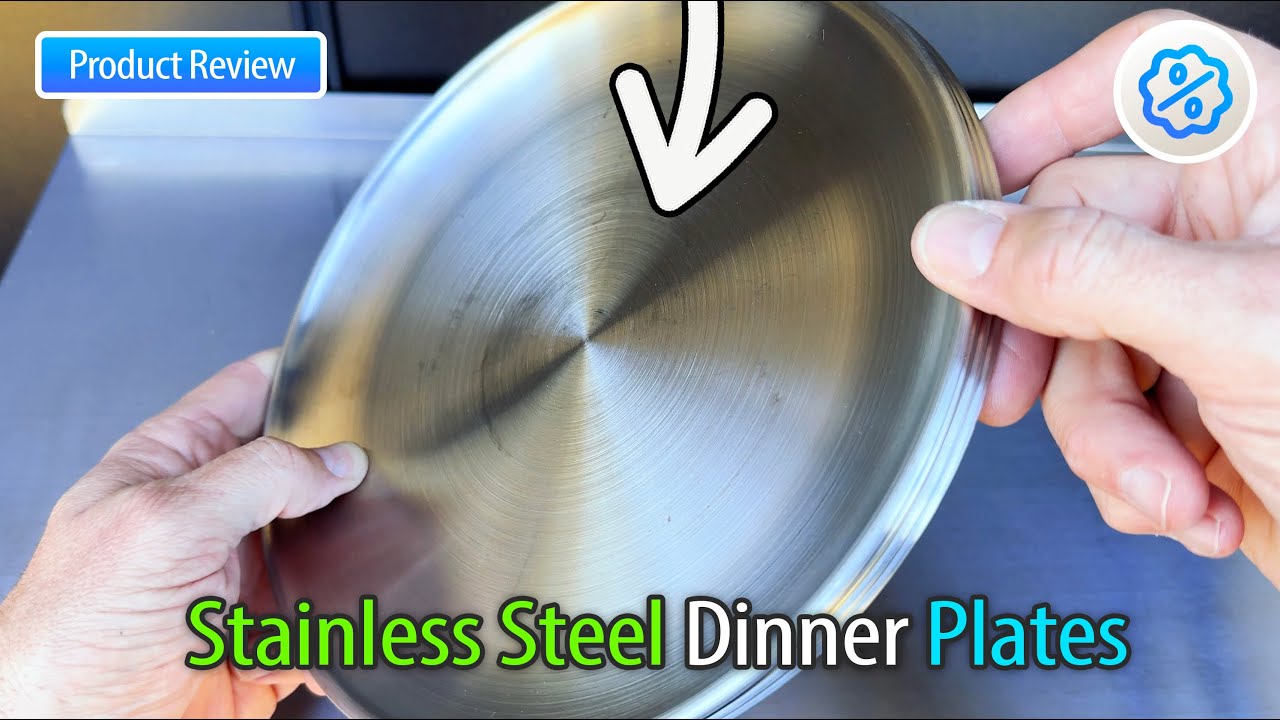
In my experience with the Paoli 18/8 Stainless Steel Dinner Plate, the material claim is immediately verifiable. These plates are entirely made of stainless steel and explicitly identified as 304 stainless steel. This straightforward confirmation removes guesswork and sets a baseline for expected performance.
- Look for explicit '304 stainless steel' labeling
- Avoid ambiguous terms like '18/8' without alloy verification
- Confirm the entire plate body is stainless, not just a coating
Edge Finish: Smoothness Indicates Care and Craft
Beyond the base material, manufacturing quality shines through in details like the edge finish. A properly finished edge not only enhances aesthetics but also prevents rough edges that can wear down over time or irritate hands during use.
The Paoli 18/8 Stainless Steel Dinner Plate demonstrates this principle well. The edges show a stamped finish where the metal was rolled over, creating a smooth surface without burrs or sharp remnants. This 'soft around the edges' treatment mimics the uniformity of paper plates, indicating careful production processes.
- Inspect edges for smoothness and absence of burrs
- Prefer stamped or rolled edges over machine-cut edges
- Smooth edges contribute to both comfort and durability
Stacking Integrity: Space-Saving and Stable Storage
Practicality enters the picture with how well plates stack. Tight, stable stacking reduces cupboard space while preventing scratches or damage during storage. This feature also hints at consistent manufacturing thickness and flatness.
When testing the Paoli 18/8 Stainless Steel Dinner Plate, I found they stack really nice. The set of 4 plates fits tightly with minimal gap, making them compact and cupboard-friendly. This stacking performance isn't just convenient—it reflects attention to dimensional consistency.
- Check stack height versus individual plate thickness
- Look for consistent roundness and flatness
- Tight stacking prevents edge-to-edge scratches
Who this is for
Focus your evaluation on three verifiable pillars: confirmed 304 stainless steel composition, smooth stamped edge treatment, and tight stacking ability. The Paoli 18/8 Stainless Steel Dinner Plate exemplifies these qualities, offering a clear template for what to seek in durable dinnerware.
Check the current price and availability for Paoli 18/8 Stainless Steel Dinner Plate.
Final thoughts
Selecting durable stainless steel dinner plates becomes straightforward when you anchor your decisions to observable evidence: material grade, edge finish, and stacking performance. These criteria transform subjective claims into measurable reality, helping you invest confidently in dinnerware that will endure daily use.
As an Amazon Associate I earn from qualifying purchases. I may earn a commission from purchases made through links on this page at no additional cost to you.