
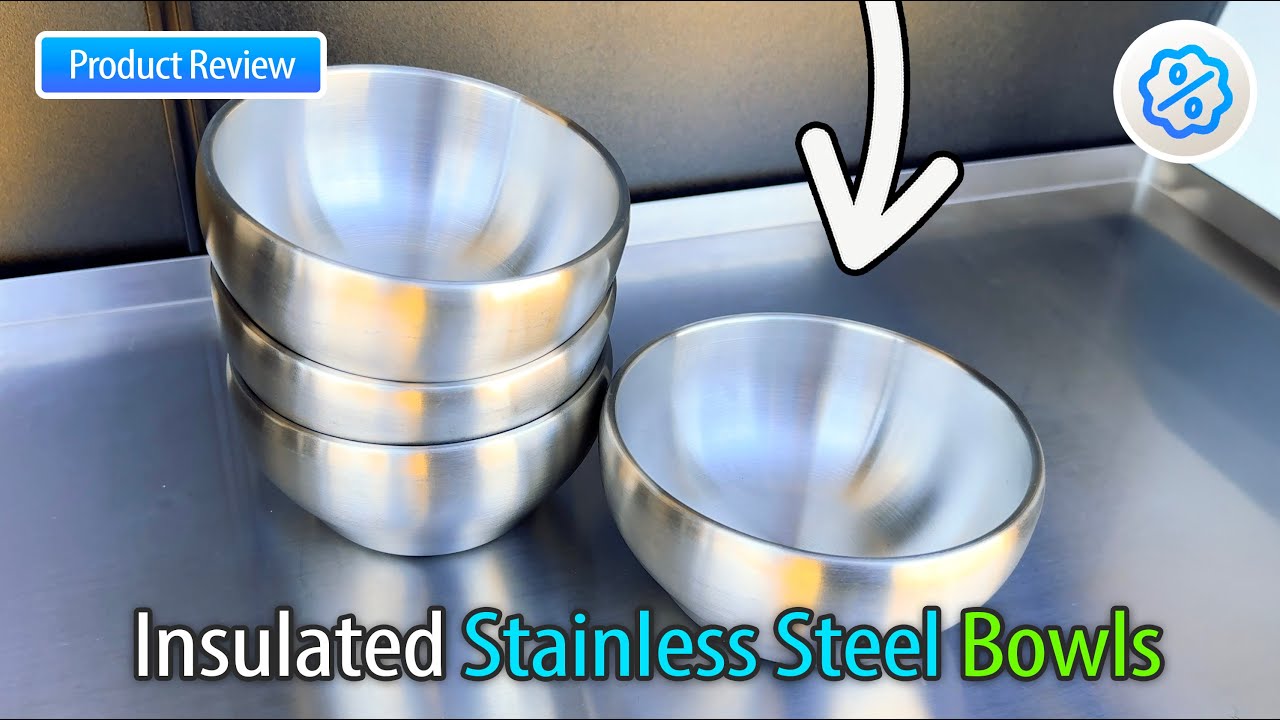
Double-wall insulated bowls offer excellent temperature retention for both hot and cold foods, making them ideal for camping and outdoor activities. However, their design introduces a practical consideration: stackability. This review examines the inherent stacking limitations of these bowls and what consumers should know when planning storage and packing strategies.
The Stacking Challenge
Double-wall insulated bowls, by their very design, present unique stacking characteristics that differ from standard bowls. The added insulation layer creates additional space between walls, which impacts how tightly they can be nested together.
As noted in first-person experience, 'They don't stack maybe as, as well as I'd prefer, but I think that's just the way that the shape is because they're insulated and double walled.' This observation highlights the fundamental trade-off between thermal performance and compact storage.
- Insulation creates additional space between bowl walls
- Standard bowls typically stack more tightly
- The limitation is inherent to the double-wall construction
Practical Implications for Storage
While the stacking limitation is acknowledged as a design constraint, users report that 'They only, they only go down so much. Typical bowls are a little bit tighter together, but it's OK.' This suggests that while not ideal, the reduction in stacking efficiency is manageable for most use cases.
For camping and outdoor scenarios where space is at a premium, planners should account for this characteristic when organizing kitchen gear.
- Reduction in stacking efficiency is acknowledged but acceptable
- Users adapt storage plans to accommodate the design
- Particularly relevant for tight packing scenarios like camping
Who this is for
When selecting double-wall insulated bowls, consider how frequently you'll need to stack them tightly. If compact storage is critical, you may want to evaluate whether the thermal benefits justify the reduced stacking capacity, or consider alternative storage solutions.
Final thoughts
The stackability limitations of double-wall insulated bowls represent a necessary trade-off for their thermal performance advantages. While they don't nest as tightly as standard bowls, users generally find this acceptable given the benefits of temperature retention. Understanding this design constraint helps set realistic expectations for storage and packing efficiency.
As an Amazon Associate I earn from qualifying purchases. I may earn a commission from purchases made through links on this page at no additional cost to you.